A detached Nashville home can legally be a condominium unit. Read the recorded declaration and the association’s actual master policy together to find who insures the roof, exterior walls, shared property and owner-installed finishes.
Start with the deed and the building
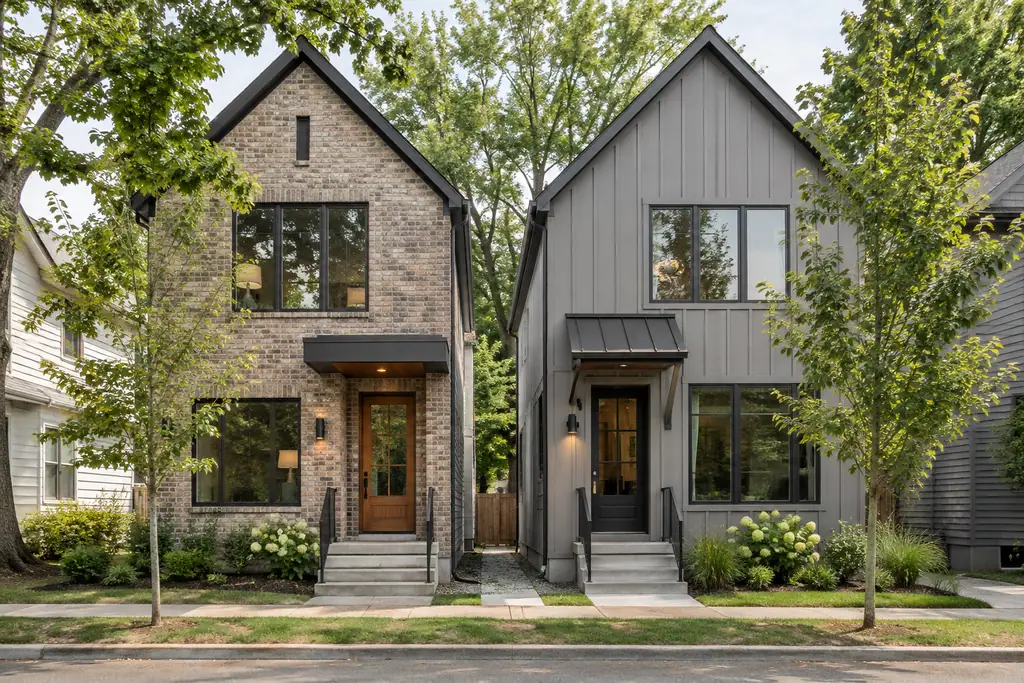
Imagine two Nashville homes with separate front doors, roofs and street addresses. The driveway runs between them. One listing calls the property a single-family home, and the closing paperwork describes it as Unit B. Before asking for a price, find out what Unit B includes. The owner might be responsible for insuring a whole building, or an association policy might insure some of the property needed to rebuild it. The premiums for those two jobs tell you very different things.
Horizontal property regime, often shortened to HPR, is a term you may see in Nashville records for property divided into units with rights in shared elements. Metro’s residential development guide discusses projects where two homes replace one. A townhouse describes a building style. Side-by-side townhomes can be separately deeded homes on individual lots or units in a condominium. A detached home can also sit in a condominium regime. Confirm how this particular home is legally described with the title professional handling the transaction.
Find the documents that answer different questions
Ask the closing agent or association for the recorded declaration or master deed, all amendments, exhibits showing the unit boundaries, and any written insurance or deductible-allocation provisions. Get the current master policy declarations, insured-location schedule, property forms and endorsements from the association or its agent. An insurance certificate can help you identify the insurer, dates and limits. You still need the applicable wording to answer questions about the shell of the building and your interior finishes.
The deed tells you what interest is being sold. The recorded documents can describe ownership, maintenance and insurance duties. A policy describes what the insurer actually agreed to cover. Keep a short note whenever these sources leave a question unresolved. An association arranging a routine roof repair, for example, does not establish how the next hail loss will be funded.
For a Davidson County property, the Register of Deeds can help locate recorded documents when you provide the property details and available instrument references. If there is no professional manager, contact the other owner or association representative. Ask who purchases shared insurance, who receives renewal notices and where the current policy is kept.
Tell Your Insure Cure, LLC about this home and when you need coverage.
Request a closing quoteWalk the building from roof to flooring
Start at the top. Ask which policy would address shingles, decking, flashing and roof framing. Continue with siding or brick veneer, exterior doors, windows, shared walls, built-in cabinets and floor coverings. For a detached pair, include the driveway, retaining wall, shared utility line and common fence. For an attached row, ask about the party wall, any common attic space and any plumbing serving more than one unit.
Request an answer for three columns beside each item. Who handles routine maintenance? Who must arrange repairs after major damage? Which insurer and policy would first review a claim involving it? If you encounter an expression such as “walls in,” ask where the boundary falls in the actual documents. Does it include drywall? Original cabinets? The custom kitchen installed last fall? Use those answers and the cost of replacing your finishes to size the building coverage you buy yourself.
The Tennessee Condominium Act of 2008 addresses association insurance for condominiums to which its provisions apply. Its insurance section distinguishes common elements from certain units with horizontal boundaries described in the declaration and separately addresses owner improvements. The project’s creation date and recorded arrangements matter. If responsibility for a roof or wall is disputed, a Tennessee real-estate attorney can interpret the documents. Give that interpretation to the agent reviewing the proposed insurance.
Put a master deductible into household dollars
Suppose the master policy lists a $30,000 deductible for a covered storm. It is a four-unit project. Under an equal allocation to all four owners, the arithmetic would be $7,500 each. If a valid rule instead allocates that expense only to an affected unit, that owner’s exposure could be very different. First confirm whether the stated deductible is per occurrence, building or unit. Then ask the association how it would allocate that particular charge and request the governing provision.
Bring the example to your own insurer. Ask whether your loss-assessment coverage would respond to this cause of damage and this kind of charge, what deductible or sublimit would apply, and whether the timing of the assessment matters. Maintenance assessments, reserve contributions, uncovered perils and assessments arising from a master deductible can receive different treatment. A single dollar limit on the quote cannot answer all four questions.
Check the lender’s requirements before closing
Send the lender the exact unit address, legal project name, proposed individual insurance and evidence of the master coverage. Underwriting a mortgage and insuring what you own are related reviews. A lender can have specific requirements for a condominium or planned unit development, including acceptable master insurance and deductibles. Ask what evidence it needs and who is responsible for obtaining it before the closing date.
If the master coverage is limited to common interests and you are responsible for the dwelling, say that explicitly in your quote request. If the association covers part of the building, identify your finishes, belongings, personal liability and temporary-housing needs. A useful quote is one you can set next to the master documents and explain without guessing who would pay for the same wall twice.
Bring to a quote review
- Copy the declaration, exhibits, amendments and current master insurance documents.
- Confirm whether the exact building and unit appear on the insured-location schedule.
- Separate maintenance, repair after damage and insurance responsibility for each major component.
- Translate the master deductible into the owner's possible share and ask about the individual policy's applicable limit.
- Confirm lender acceptance and the date any individual coverage must begin.
Homeowner questions
Does a detached Nashville HPR automatically need a conventional homeowners policy?
No. A detached unit can be a condominium. The recorded declaration, owner’s repair duties and association’s actual policy determine what the owner must arrange.
Can I use the previous owner’s amount of interior coverage?
Use their insurance as one reference. Identify which finishes belong to you, what the master policy includes and what those materials and labor would cost to replace today.
What if my association has only liability insurance?
Request evidence of its insurance and check the declaration. Liability insurance serves a different purpose from property insurance. Ask which policy would fund reconstruction of the dwelling and shared structures.
Sources & local resources
- Metro Nashville Water Services · Single Family Residential Development Guide
- Davidson County Register of Deeds · Get copies of recorded documents
- Tennessee General Assembly · Public Chapter 766, Tennessee Condominium Act of 2008
- Tennessee Code § 66-27-413 · Association insurance
- Fannie Mae Selling Guide · Master insurance for project developments