Verify the responding fire department and water source for the street address. List the use and rebuilding cost of each barn, shed and workshop. Tell the agent about boarding, business activity or paid visitors so property and liability can be reviewed together.
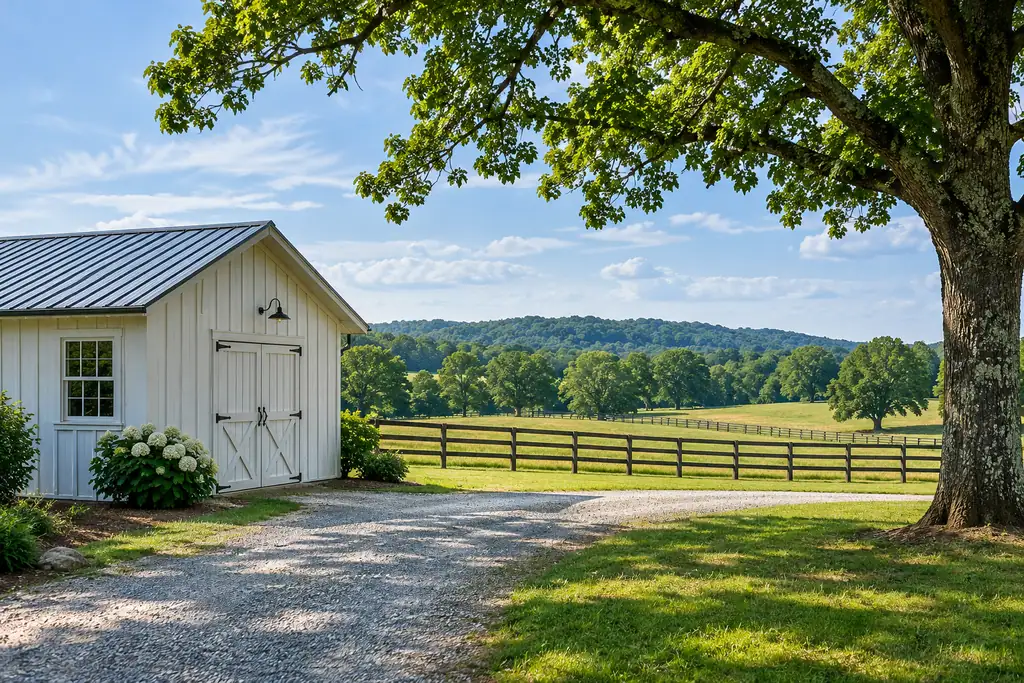
Start where responders would enter your property
A rural Middle Tennessee mailing address tells an insurer less than you might expect. The house can have a Franklin or Murfreesboro address while another department provides its primary fire response. Locate the actual driveway and dwelling on a map, especially if the parcel has been divided, the house sits well off the public road or the post office still uses an older road name. A point at the mailbox can land in a different place from the building the insurer needs to evaluate.
Ask the department’s non-emergency office which station responds to your address and how it obtains firefighting water. Tennessee publishes a fire department directory. Ask the insurer to verify the location, responding station, road distance and recognized water supply it used. Verisk’s Public Protection Classification considers available fire protection, including station response and adequate water. A carrier can use its own underwriting criteria. A station visible on the other side of a creek, a nearby hydrant symbol or a pond beside the barn does not settle the insurance question.
Show the driveway as well as the roof
Prepare one photograph from the public road, one at any gate and one facing the actual house. Note the lane surface, seasonal flooding, bridge, low branches, turnaround and distance from the entrance. Ask the local department about any access questions on its non-emergency line. If a gate or bridge limits entry, have the department or an appropriate qualified professional advise what is needed. A homeowner’s guess at a bridge load rating is a poor substitute for documentation.
An insurer may request evidence of smoke alarms, a monitored fire alarm or other protections. Clarify what equipment is installed, which buildings it covers, whether it is monitored and whether there is a current service certificate. A barn alarm or camera that sends a phone notification should be described as such. Document upgrades and ask if they change eligibility, pricing or anything in the policy. No particular upgrade guarantees a specific protection class or premium.
Give every building its own description
Take a short walk and list everything from the attached garage to the open-sided equipment shed. For each, note approximate dimensions, attached or detached status, construction, roof, wiring, heat, occupancy, use and estimated reconstruction cost. Describe structures joined by a breezeway or utility line and let the insurer classify them. A building’s name tells only part of the story. A “barn” might store household belongings, shelter horses, contain a cabinet business or provide a guest apartment.
A single shared detached-structures limit can be smaller than the cost to rebuild one workshop. For example, where an actual quote lists a $60,000 combined limit, a $55,000 workshop and $25,000 equipment shed create an obvious $20,000 gap if both are destroyed and otherwise qualify. Determine whether an increased limit or separate schedules are offered. Even an adequate dollar limit will not restore coverage that an occupancy or business-use exclusion takes away.
| Property feature | What to ask about on the proposal |
|---|---|
| Detached workshop | Structure limit, household versus business tools, customer property and any commercial use. |
| Pole barn and equipment shed | Named structures, covered perils, open-sided construction, wind terms and roof settlement. |
| Guest cottage or apartment | Permitted occupancy, regular tenants, occasional guests and any paid rental days. |
| Fences, gates and private bridge | Whether each item is insured, under what cause-of-loss wording and with what sublimit. |
| Tractor, utility vehicle and trailer | Where each is used, who owns and drives it, and what covers physical damage and liability off the parcel. |
Tell Your Insure Cure, LLC about this home and when you need coverage.
Review my country homeSeparate domestic water from firefighting water
If you have a private well, locate the wellhead, pump house, pressure tank, buried supply line and shutoff. Record which components are inside the dwelling or in a detached structure, and whether the well serves another residence or barn. Tennessee’s water resources department can help with available well records and information about licensed well professionals. Keep service invoices and any shared-well agreement. The household well and the department’s recognized firefighting water supply are separate facts.
Think through a lightning strike that damages a pump, a pump motor that wears out, a pipe that freezes in a detached pump house and surface water entering the well after a storm. They have different causes and potential insurance terms. Ask about equipment breakdown, service-line coverage, exclusions, repair access and any testing or cleanup charges. Record whether an endorsement covers this particular well pump or only specified equipment inside the house. For a change in water quality, use local health or water professionals to address safe use.
Give an honest account of animals, land use and visitors
For household pets, disclose the species, relevant bite or incident history and activities requested by the application. For horses or livestock, explain who owns each animal, whether anyone pays for boarding or lessons, who handles them, and whether visitors are invited onto the property. Property insurance on a barn, liability for an injury to a visitor and injury to someone else’s animal entrusted to you are three separate questions. Even occasional payment or barter can matter to how the insurer views the activity.
Describe hay or produce sold, land leased to a neighbor, a home workshop with customers, equipment borrowed from others and hired help. If activities extend beyond ordinary residential use, ask about a farm policy, business endorsement, separate liability or other coverage matched to the operation. Ask specifically about property in your care, custody or control and any animal or activity exclusions. A waiver or a business entity does not by itself provide liability coverage. If the use changes later, raise it before inviting paying guests or customers.
Describe the acreage you have, then compare offers
Picture a house on 12 acres occupied by its owner, with one family horse, one horse boarded for a friend, a workshop storing business inventory and a shared private road. “Primary residence with a detached garage” leaves out four insurance questions. Include the boarding arrangement, inventory ownership, building values and access details in the first request. Ask separately what an offer covers for the house, structures, equipment and liability. A narrower policy may deserve consideration when certain coverage is available separately, but price the complete arrangement before committing.
If an insurer declines because it cannot verify a station or hydrant, ask what address information it used, what evidence it will review and which part of the decision is within its underwriting discretion. An aerial marked with the driveway and responding station can help correct an obvious location error. Other insurers may review a well-documented rural property differently.
Bring to a quote review
- Confirm the responding department using its non-emergency contact.
- Prepare a one-page structure list with uses, sizes and values.
- Describe the well equipment, any shared water and driveway access.
- Disclose boarding, rental use, sales, workers and customer visits.
Homeowner questions
Does a pond put me in a better fire classification?
A pond by itself does not establish the fire classification. Ask the department and carrier which water supply and response arrangements they recognize at your address.
Will my detached barn use the limit shown for other structures?
Check the policy’s definition, covered use, perils, exclusions and shared limit. A farm or business structure may need its own listing.
Are horses covered just because the property is insured?
Property insurance on the home establishes no automatic coverage for the horses. Identify animal ownership, boarding or paid activity, and liability to others when requesting quotes.
Sources & local resources
- Tennessee State Fire Marshal’s Office · fire department directory
- Verisk · how an address affects its fire protection classification
- Tennessee Department of Environment and Conservation · private well information
- Maryland Insurance Administration · consumer guide to farm insurance coverage types
- University of Missouri Extension · farm liability insurance