Check the elevation and access route for barns as well as the house along the Duck River. List who owns each horse, whether anyone pays to board or ride, and which buildings and equipment support that use.
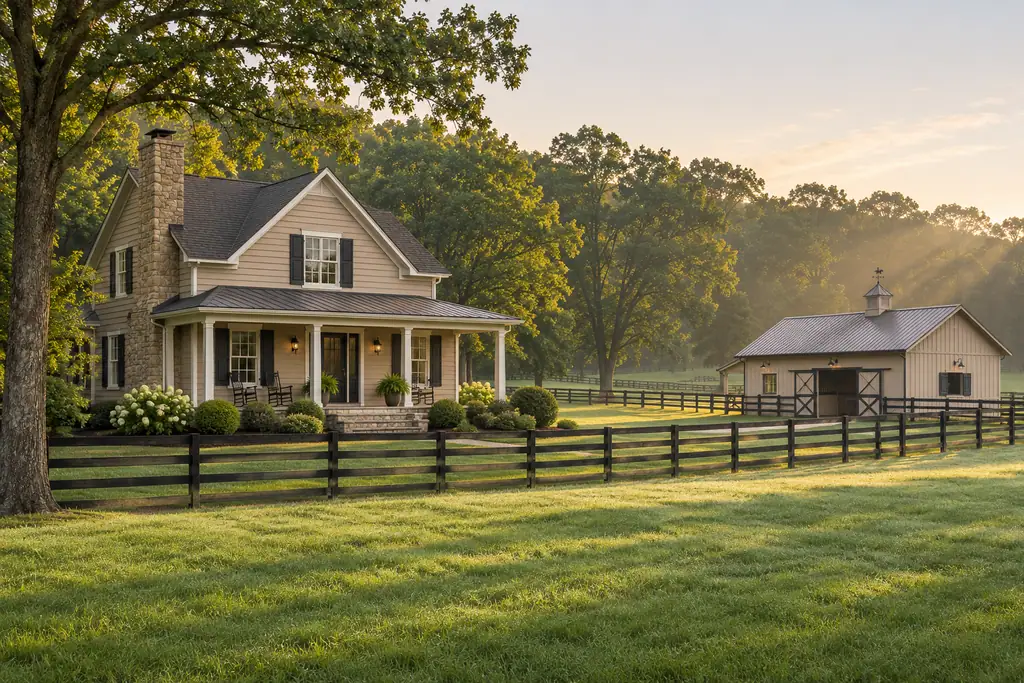
Trace the Duck River and the smaller branches
Shelbyville’s comprehensive plan identifies the Duck River and streams including Big Springs Branch, Holland Branch and Flat Creek. It describes flood controls at Normandy Dam and the Big Springs Flume, and documents the use of levee floodgates during the 2019 high water. Use the current FEMA map to locate the building, driveway and detached structures. Flood controls and the position of the house help explain the setting, while the map and elevation records supply the address-specific details.
The USGS Shelbyville gauge lists impacts at documented river stages, including low agricultural land and local river access points. Check the gauge to understand river conditions during an event. For a purchase or renewal, ask the owner whether high water has reached fencing, an arena, an outbuilding, a septic field or a low crossing, even when the home remained dry.
Tell Your Insure Cure, LLC about this home and when you need coverage.
Compare my coverageDescribe the horses and buildings separately
The University of Tennessee Extension identifies Shelbyville as home to the National Walking Horse Celebration. If you keep horses on your property, tell the agent who owns them and what happens on site. A family keeping its own horses, a neighbor paying for pasture and an instructor giving lessons involve different activities. Record who handles the animals, who visits and whether anyone pays cash, trades services or stores equipment there.
Create a simple list of barn, run-in shed, hay storage, tack room, fencing, arena lighting and each trailer. Give dimensions, construction materials, utilities, use and replacement estimates. Say which equipment belongs to you, which belongs to another owner and where it is kept. Ask whether the proposed homeowners or farm form insures the structures, equipment and activities. For animals entrusted to you, ask specifically about your responsibility for injury to an animal in your care.
Walk through one wind or high-water loss
Suppose wind tears the roof from an open-sided shed and rain damages saddles stored beneath it. Ask how the proposed form would treat the roof, household-owned tack, tack belonging to a boarder and the cleanup. Record different limits or exclusions against each item. If flooding reaches the same shed, ask what a separately quoted flood policy could insure at that structure. A dwelling-only quote does not show the barn’s insured status.
If the only approach crosses a low area, identify a higher route within your actual access rights and arrange in advance where animals could be moved safely. Keep emergency contacts and dated equipment photos away from the barn. This inventory serves a second purpose at renewal when a new shed, tractor, horse trailer or boarding arrangement changes what you own or do.
Bring to a quote review
- Check mapped flood exposure for the house, barn, driveway and pasture.
- List every structure, trailer and piece of equipment with its owner and use.
- Disclose boarding, lessons, leased pasture and paid or exchanged services.
- Ask about injury to animals in your care and damage to others’ equipment.
Homeowner questions
We keep two family horses. Should we mention them on a home quote?
Yes. Describe where they are kept, who owns them and whether any third parties participate or pay. The agent can review the buildings and animal-related liability using those facts.
Does the Duck River gauge tell me how high floodwater will get inside my barn?
The gauge measures the river at its station and lists documented local impacts. The barn’s site elevation, flow paths and floor height determine its particular exposure. Ask the floodplain administrator about the site.
Sources & local resources
- City of Shelbyville · Comprehensive plan and flood history
- USGS · Duck River near Shelbyville and observed flood impacts
- University of Tennessee Extension · Bedford County
- National Weather Service Nashville · 2019 Bedford County road flooding
- FEMA · Flood Map Service Center
- National Association of Insurance Commissioners · Consumer guide to home insurance